
The Mountain That Changed the World
An extract from Opium The Longest Hangover — Part One

Rushing into Lima bus station around twenty-five years ago, my friend Sage and I grabbed a handful of empanadas as we boarded our coach. Sage was from Cardiff; I grew up in Liverpool. Neither of us had any idea what an empanada was. Eager to find out, I took a bite — and a mixture of tuna and anchovies spilled straight down me and onto the pint-sized Peruvian sitting beside us. He scowled, understandably. We had a nineteen-hour journey ahead of us to our next destination, the mountainous and landlocked Bolivia.

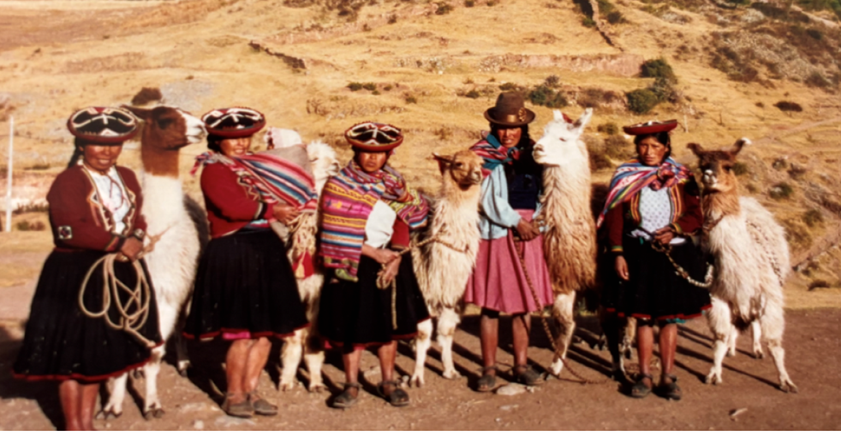
Long bus journeys are never pleasant, but I remember nearly every minute of this one. As we left the verdant Pacific coast by the capital and ascended the majestic Andes mountains, the air cleared and it became much cooler, but nothing could prepare us for the Anti Plano, pictured below. For mile after mile we traveled across a desolate landscape of vast blue skies, desert like spartan land, dotted with the occasional cactus plant. It was such a delight that on one of our few stops we encountered some beautiful llamas and their weather-beaten owners. Life is difficult in this part of the world.
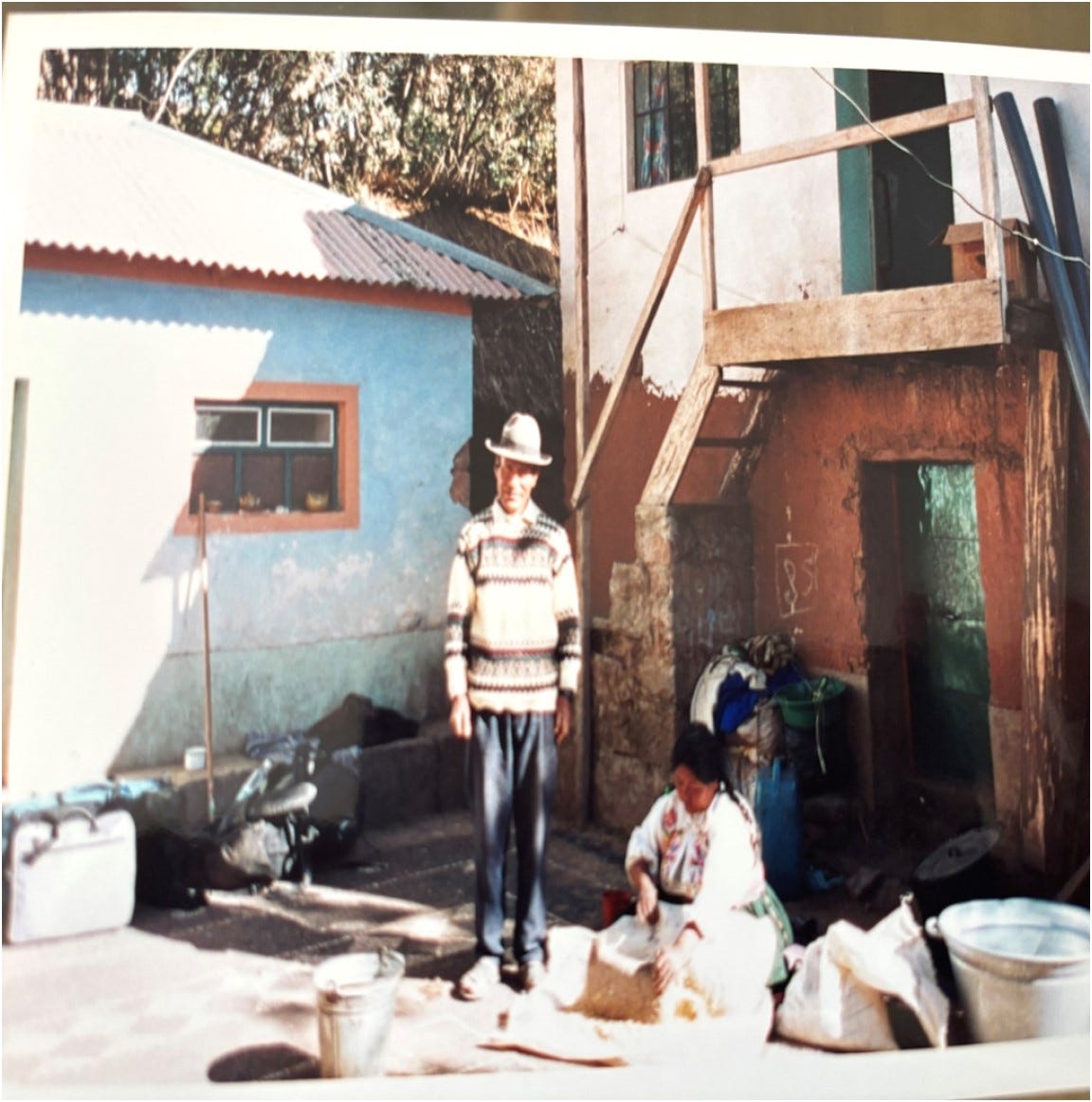
That first night in Bolivia, we stayed with a local family on the shores of Lake Titicaca, who despite living in abject poverty, shared their sopa de maní (potato soup) with us, served with cold crusty bread.
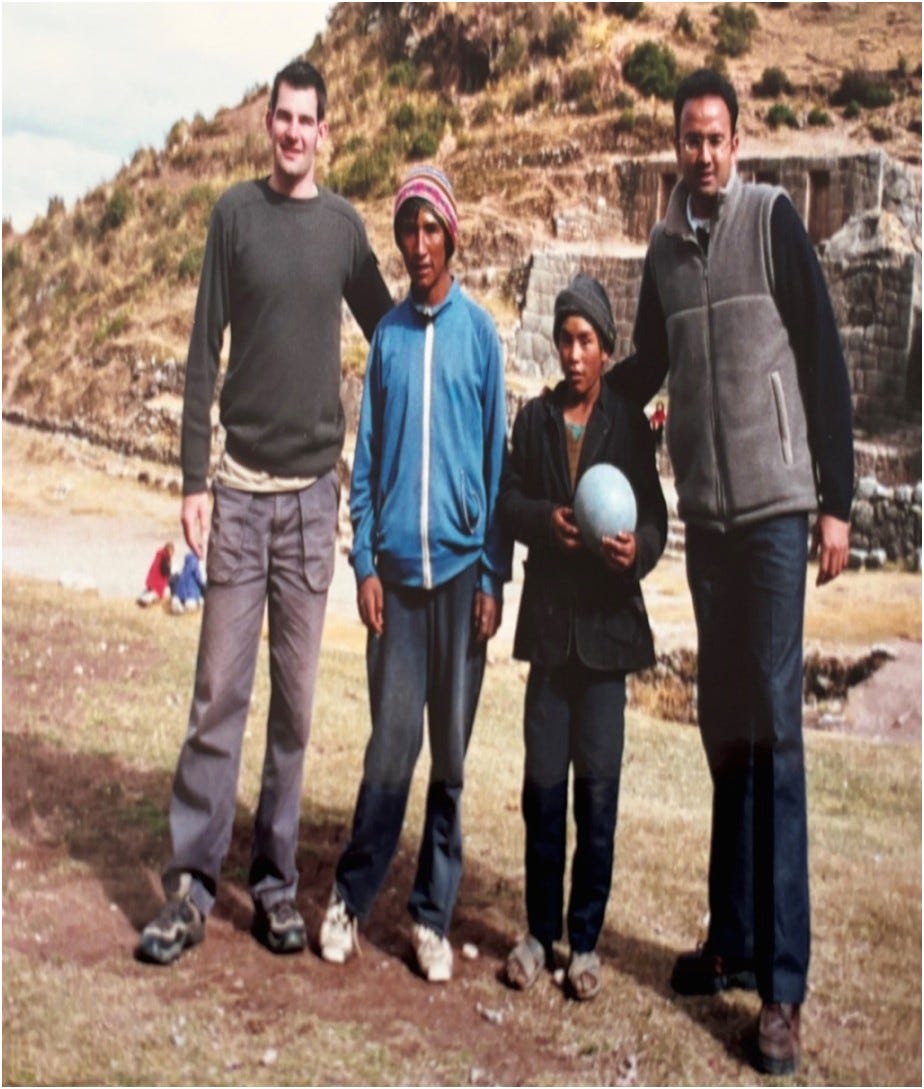
The night was cold, the morning more so and we tried to warm up playing football with their children, using an improvised ball, as they could not afford a proper one. The altitude meant that after just a few minutes we were out of breath. The poverty in the country is a tragedy, because the family and indeed Bolivian people should by right belong among the wealthiest on the planet. The reason lies in a mountain you have probably never heard of, but should have.
Cerro Rico: The Mountain That Ate Men
Located near the town of Potosi, standing above 4000 metres tall, Cerro Rico — Rich Mountain — was responsible for approximately 80 per cent of global silver production between the 16th and 18th centuries. Silver flowed from this single mountain into European capitals, funding infrastructure and fuelling colonial expansion. It flooded into the Chinese economy, underwriting the Qing dynasty’s trade in silk, porcelain and tea. And it created the first truly global currency: the Spanish dollar — the real de ocho, or pieces of eight — universally accepted across the trading world.
This was globalization on a level never seen before. Chinese goods became coveted not just in Europe but across the world. The essential ingredient keeping this party going was an endless supply of silver. And that supply depended entirely on the labour of millions of indigenous workers, forced to mine and carry ore out of the freezing heart of Cerro Rico. There is a saying that the mountain produced enough silver to build a bridge from Potosi to Madrid and a return bridge built with the bones of all the labourers who died in the mines.
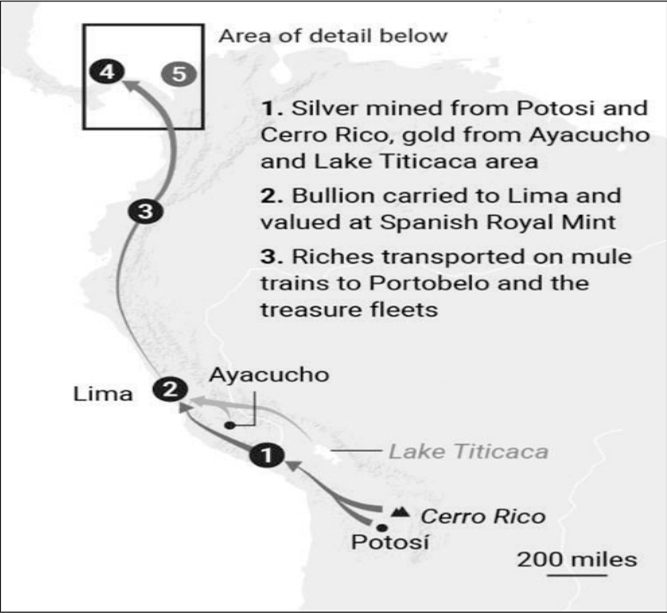
Transportation across the sparse and mountainous terrain was only one part of it, the silver mining process was not for the faint hearted. The author Isabel Allende provided a review for perhaps the most important authority on this subject, the masterful Open Veins of Latin America, by Eduardo Galeano. He shares that:
‘In three centuries Potosí’s Cerro Rico consumed 8 million lives. The Indians, including women and children, were torn from their agricultural communities and driven to the Cerro. Of every ten who went up into the freezing wilderness, seven never returned. The Spaniards scoured the countryside for hundreds of miles for labor.’
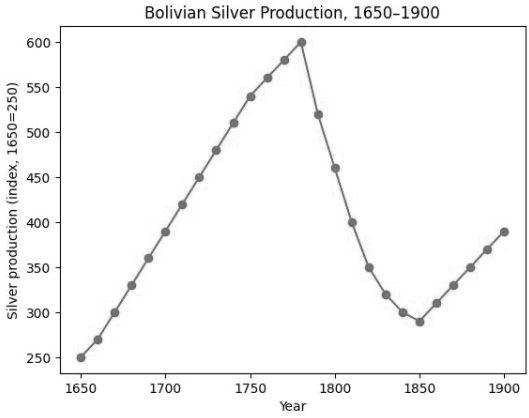
The concept of health and safety applied only to the portly Spanish mine owners, who sent generation after generation of native workers to near-certain death. This horrific set of circumstances continued for a couple of centuries, after which the Spanish conquistadors faced a combination of uprisings led by Bolivar across the continent and a diminished workforce to mine and transport the silver. Production collapsed as we can see below and this is where our story really starts.
Three Addictions. One Chain.
The Spanish had developed an addition to silver, the British to tea and ultimately the Chinese to opium — and each was connected to the other in ways that shaped our modern world in ways most of us were never taught.
Next week we will follow that chain from the icy mountains of Bolivia to the tea rooms of Georgian England to explore how a warm beverage took such a hold over a nation and how the subsequent collapse in Bolivian silver production triggered a crisis thousands of miles away.
Such a vibrant read !!