
The Taste For Tea
An extract from Opium The Longest Hangover — Part Two

Medieval England was cold, boring and miserable. Hunting, hangings and witch trials were the order of the day. That is of course until a glamorous Latina arrived on our shores from distant Portugal. Her name was Catherine De Braganza, pictured below. The impact she had on London polite society can be compared to Princess Diana; multiplied many times. At the time Portugal was riding high as a European power and England was a poor backwater. Catherine brought with her an addiction that would spread across the country like wildfire.
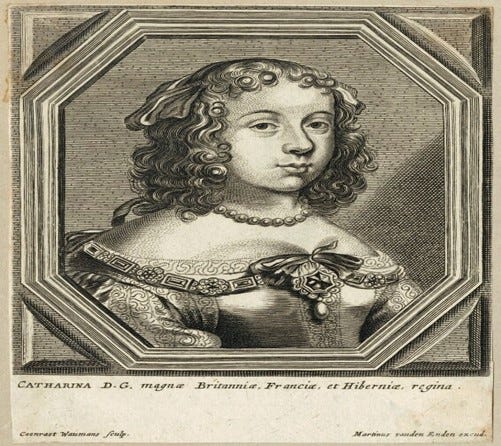
Alongside her many dresses and jewels she brought a crate of tea, a beverage that was little known in England back then. The popularity of the warm beverage as we can see below sky-rocketed over the next century. However, it would be mistaken to assume this was just a matter of taste. Catherine was the best possible brand ambassador for a drink that was sipped in beautiful porcelain cups, accompanied by cakes and savouries. The consumption of tea was more than as a drink, it was an experience and most importantly confirmed a persons’ standing or position in a growing class-conscious society.
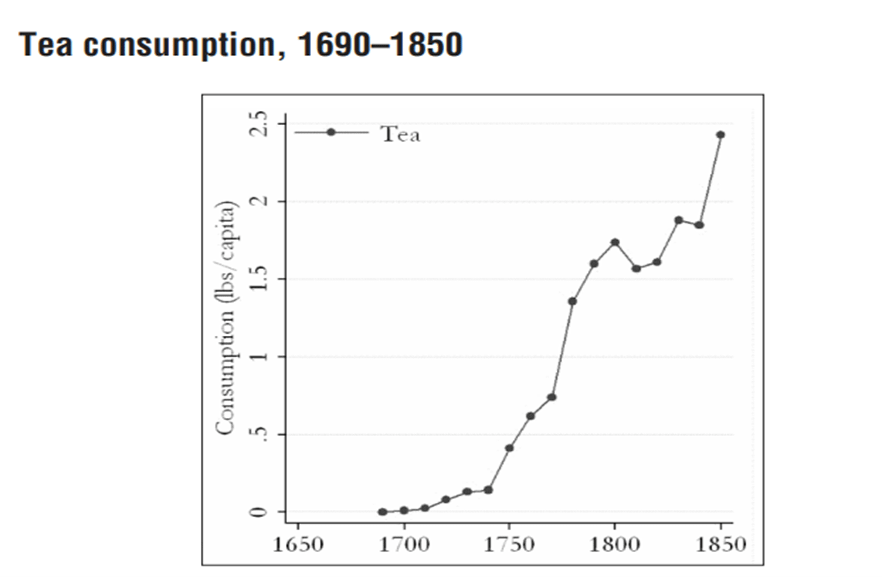
To get a sense of how important this drink was becoming, we can compare it to the modern day adoption of smart phones, which followed a similar hockey stick growth curve during the start of this century.

But the key difference between the two, is that phones had a number of manufacturers, providing consumers with choices at different price points, but in the case of the much coveted black leaf, the only provider back then was China. Tea clippers would journey below the Cape of Good Hope and through South-East Asia to trade with the mighty Middle Kingdom for a product that was becoming an essential for all classes of society, much like the phone in your pocket today.
Friedrich Engels commented in the Conditions of the Working Class in England, that tea had become quite indispensable and it was only in those places suffering the bitterest of poverty that tea was not served. As we can see below, working class households spent up to ten percent of a household’s budget on tea and sugar!
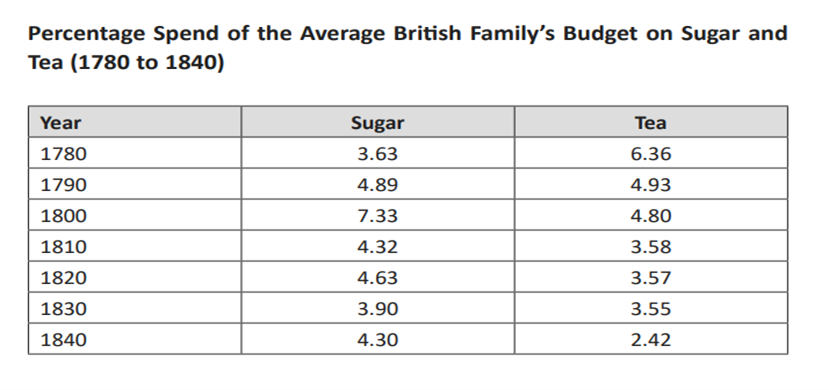
Consumption was increasing, traders were making a handsome profit and the duty paid to the government amounted to around 10% of the overall tax take (similar to corporation tax today). Tea was much more than a warm beverage to enjoy on a cold evening, it was an essential product that kept the economy and more importantly society running.
This was of course until a massive supply shock occurred, perhaps akin to what is happening with oil today. The Chinese wanted silver in exchange for tea and as we discovered last week (The Mountain That Changed the World - by Amito Sharma), a mountain in Bolivia that kept giving and giving, suddenly stopped. Silver production dramatically fell in the early 1800’s, but tea consumption continued to explode, something had to give.
A growing trade deficit with China arrived at exactly the wrong time. Napolean was causing havoc across large parts of the continent and a quick solution was needed. The responsibility was left on the shoulders of a man called Lord Macartney (pictured below); a man you have probably never heard of; but perhaps should have. His disastrous trip to China changed the destiny of the region forever (including that of my own family) and his meeting with the Emperor Qianlong (pictured below), could not have gone worse.
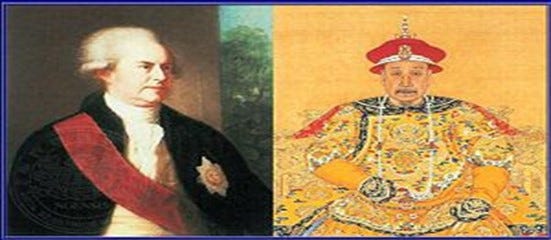
The Qianlong Dynasty was at its zenith of power, with an economy that contributed to over a third of global GDP and an empire that extended far and wide. His courtiers were perplexed by the news that a frock coated, periwigged British official was sailing to Beijing to meet with them. At the same time, Lord Macartney had high aims of securing a trade deal, for tea and other products that would meet the insatiable demand at home. What could possibly go wrong? His trip would sow the seeds of what would later be known as the century of humiliation. We follow the journey next week.
All proceeds from ‘Opium the Longest Hangover’ will be donated to local charities that support communities that were home to one of the largest narcotic enterprises in history.